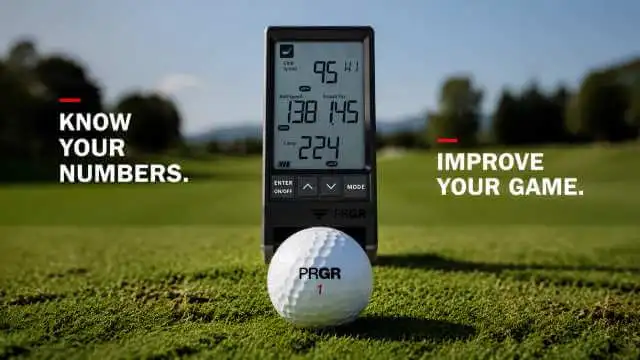
Choosing one of the best golf launch monitors can be tricky. Advanced metrics such as spin rate, launch angle, and club path are found on systems that cost hundreds or even thousands of dollars. For the majority of golfers, it’s way simpler: Keep track of their swing speed, gather insights on distance, and practice sessions all at a fraction of the cost.
PRGR portable launch monitor – Best for golfers who want useful performance feedback in a small and economical device. It zeroes in on the data that really matters to most recreational players: swing speed, ball speed, and estimated carry distance.
In this review of the PRGR launch monitor, we examine its features, accuracy, ease of use, limitations, and value so you can determine if this affordable golf training device is a good fit for your game.
Table of Contents
Quick Overview: PRGR Portable Launch Monitor
| Category | Details |
| Product Name | PRGR Portable Launch Monitor |
| Brand | PRGR (Pro Gear) |
| Best For | Recreational golfers, beginners, practice sessions |
| Main Measurements | Swing speed, ball speed, distance estimates |
| Usage | Indoor and outdoor practice |
| Technology | Radar-based measurement |
| Portability | Extremely compact and lightweight |
| Price Range | Budget-friendly (typically under $250 depending on model and retailer) |
| Main Strength | Simple speed and distance feedback |
| Main Weakness | Limited advanced analytics |
The prgr portable golf launch monitor is not intended to match up against pro-level systems. Instead, it is aimed at golfers who want instant feedback while practicing with no fuss and within their budget.
Its biggest advantage is simplicity. Put it behind the ball, swing, and get immediate feedback.
What Is the PRGR Portable Launch Monitor?
PRGR Golf is a Japanese golf brand that manufactures clubs, practice aids, and Other devices, including equipment performance-improvement tools.
While high-end golf launch monitors assess multiple dozen data points, the PRGR portable launch monitor device is all about the three most important ones:
- Swing speed
- Club speed
- Ball speed
- Estimated distance
- Smash factor (depending on model)
For the majority of amateur golfers, those numbers are sufficient to identify areas for improvement.
Golfers who increase their swing speed over time can easily track and measure their improvement. A player with distance issues has the opportunity to dissect if the problem lies with poor club speed or ineffective contact.
PRGR Launch Monitor Features
1. Swing Speed Measurement
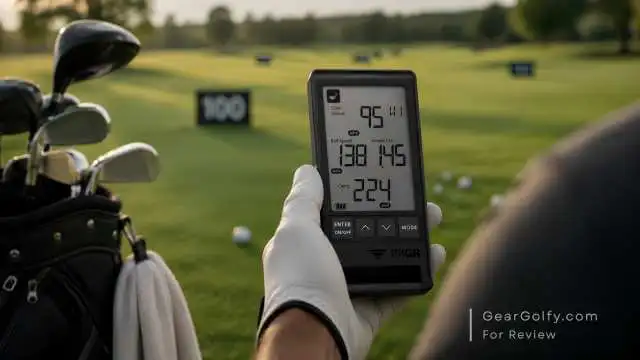
The principal reason golfers purchase the PRGR portable launch monitor is for swing speed tracking.
Of all the performance metrics, swing speed is arguably the simplest one to grasp. The only time increasing speed really results in longer shots is when that increase in speed comes with better contact and greater overall consistency.
The device tracks club speed throughout the swing and gives immediate feedback after every shot.
This makes it useful for:
- Speed training
- Driver practice
- Comparing different swings
- Tracking improvement over time
So, for golfers focused on developing more power, feedback that can be measured is far more helpful than simply trying to gauge whether or not the swing feels faster.
2. Ball Speed Tracking
Ball speed is another key metric because it shows how efficiently the club transfers energy to the golf ball at impact.
Two golfers can achieve different ball speeds with the same swing speed due to:
- Strike quality
- Clubface contact
- Equipment setup
- Swing efficiency
And this is where golfers fall dangerously out of kilter, to which the PRGR launch monitor will help provide answers.
For instance, if you gain club speed but no ball speed, then the issue isn’t power. This could be a sign of feeling thin and a poor impact on the position.
3. Carry Distance Calculation
Distance is one of the main metrics that average golfers think about.
The PRGR portable launch monitor provides distance estimates based on speed readings while you hit. Though there are far better ball-flight analyzers out there for more serious golfers, it’s still a useful tool that gives golfers at least something to build off of.
Distance estimates can help players:
- Select better clubs
- Understand realistic yardages
- Improve course management
- Track progress
For casual practice, it is preferable to keep a regular measurement and avoid having dozens of unused statistics.
4. Accuracy: Is the PRGR Launch Monitor Accurate?
A golf launch monitor review only makes sense if accuracy is its focal point.
When used properly, the PRGR portable launch monitor is capable of more than most people understand – particularly with speed-related parameters. Golfers should, however, be aware of its limitations.
Designed primarily as a training tool, rather than a professional fitting system.
Accuracy can depend on:
- Proper device placement
- Swing environment
- Ball quality
- Indoor space limitations
- Consistent setup
It doesn’t capture as much data or provide the same level of detail as premium camera-based shot tracking systems.
However, for golfers looking only for feedback on swing speed and distance, it is usually accurate enough to be useful for practice.
Display and Usability
PRGR Portable Launch Monitor: Ease-of-Use. One of the best aspects of the PRGR golf launch monitor is its ease-of-use.
Most of the best golf launch monitors need:
- Smartphone apps
- Bluetooth connections
- Account creation
- Software updates
- Subscription plans
- The PRGR approach is different.
As such, it provides a quick little nugget of information without the need for complicated technology.
That’s why it’s a great choice for golfers who want to:
- Fast setup
- No monthly fees
- Simple operation
- Immediate feedback
It lets you take it to the driving range with a few quick placements behind the ball and, in moments, start practicing.
Battery Life and Portability
This is where the portable device shines.
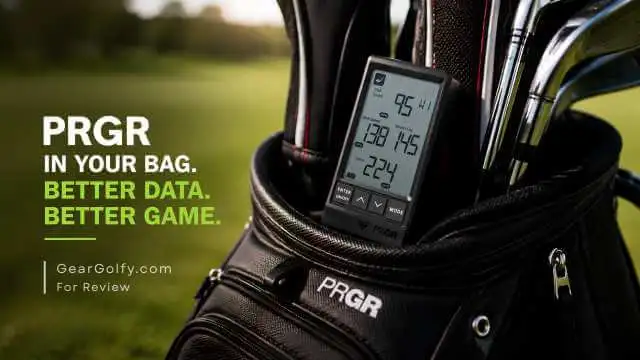
Portable Launch Monitor — The basic idea of a good training device is portability, and the PRGR portable launch monitor certainly satisfies this notion.
Its small size makes it perfect for:
- Golf bags
- Home practice areas
- Driving ranges
- Travel
It does not require a larger golf simulator space like other alternatives.
If you play golf in more than one location, portability often trumps advanced features.
Setup Process: How Easy Is It to Use?
The setup process is straightforward:
- Put the device right behind the golf ball.
- Select the correct club type.
- Align the unit properly.
- Take your shot.
- Review the measurements.
There is not much of a learning curve to becoming familiar with Versant compared to fully blown systems.
This simplicity of design makes it attractive to the novice or even the beginner user who is often intimidated by complex launch monitor software.
PRGR Launch Monitor Review: Real-World Performance
Driving Range Practice
It all makes the most sense on a driving range, and that’s where the PRGR portable launch monitor shines.
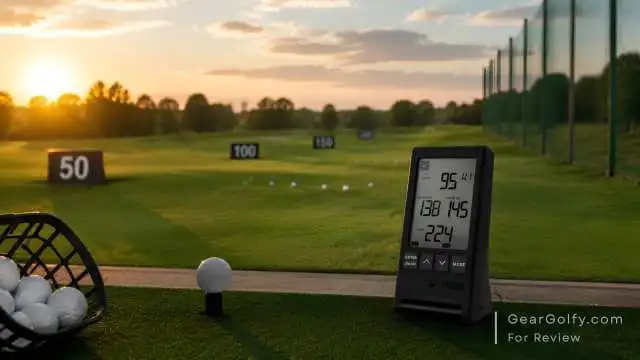
Hundreds of balls are hit by many golfers, and without asking what it is they are practicing, whether from fundamental feedback or reliable metrics, the actual methodical instruction of improvement remains a mystery. Speed & distance feedback gives more of a practice structure to your time.
Examples:
- Average driver distance is something the beginner grasps.
- Those updates will allow an intermediate player to gauge his speed and track improvements.
- You can track training progress as a competitive golfer.
- This makes random practice measurable.
Indoor Performance
You can use it indoors, but expectations should be tempered.
But you need some space here for indoor radar systems to accurately pick up everything. Such small rooms will affect performance because the radar requires sufficient distance to track the ball’s flight.
It is best indoors:
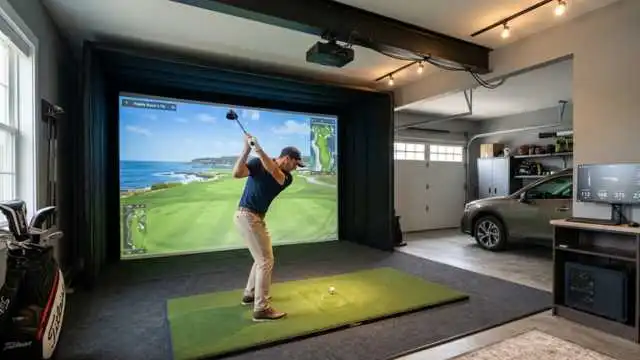
- Large garages
- Golf practice rooms
- Indoor hitting spaces
Golfers who require a full, high-end indoor simulator with virtual courses may need a more upscale setup!
PRGR Portable Launch Monitor Pros and Cons
The balanced review always takes into account weaknesses as well as strengths. The PRGR device is more than impressive for what it does at its price point; however, it’s certainly not meant to rival true launch-monitor/analysis equipment.
Pros
✅ Affordable Price Point
The primary benefit of the PRGR portable launch monitor is that you can access it.
Launch monitors are currently among the top three wish items for many golfers, but premium systems still cost $500–$3,000 and up. PRGR delivers vital performance information for a fraction of the price.
For the average player, being able to get good information while not spending too much is a huge pro.
✅ Extremely Portable
Its compact design allows you to take it with you wherever you go.
It takes a special kind of hardware to compile Sub 20 into a golf bag and take on:
- Driving ranges
- Golf practice facilities
- Outdoor sessions
- Training areas
Portability is another of the main reasons golfers opt for a PRGR portable golf launch monitor, instead of larger alternatives.
✅ Simple Operation
Advanced testing knowledge is not needed for the PRGR.
Golfers can quickly understand:
- How fast they are swinging
- How far they are hitting
- Whether their speed is improving
This is perfect for gamers who just want to achieve results without having to navigate through convoluted applications or software.
✅ No Expensive Subscription Required
A number of new launch monitors will charge a fee for deeper features.
The PRGR approach is different. The idea is that it provides straight measurements rather than pushing users to recurring software fees.
That increases long-term value for budget-conscious golfers.
✅ Useful for Speed Training
This benefits players looking to increase swing speed tremendously.
The changes in speed we see over time tell us if a training method is actually working.
Golfers can track improvement rather than relying on feel alone.
Cons
❌ Restrictive Data VS More Premium Launch Monitors
Limited features—One of the primary shortcomings is the unavailability of sophisticated metrics.
There are many other statistics that professional golfers and club fitters need, such as:
- Launch angle
- Spin rate
- Spin axis
- Club path
- Face angle
- Attack angle
PRGR is not capable of this kind of analysis.
❌ Distance Estimates Are Not Professional Level
The carry distance calculation is good for practice, but golfers should not expect the same accuracy as highly priced camera-based systems.
Environmental variables can affect outcomes, such as:
- Wind
- Ball quality
- Indoor space
- Strike consistency
The estimates are useful for casual practice. For club fitting on a professional basis, the higher end of the spectrum is more useful.
❌ Requires Correct Placement
It’s accurate like most radar-based devices — get the placement right, and you’re good.
Incorrect alignment can affect readings. To produce consistent learning, golfers must diligently follow setup instructions.
❌ Not a Full Golf Simulator
Caveat: Some buyers want a 1-to-1 virtual golf experience from every launch monitor.
PRGR is not fit for any such. It’s a training tool, not a simulator replacement.
If you’re a player in search of virtual courses, more realistic play, and deeper shot visualization, then higher-end options are worth considering.
PRGR Portable Golf Launch Monitor vs Alternatives
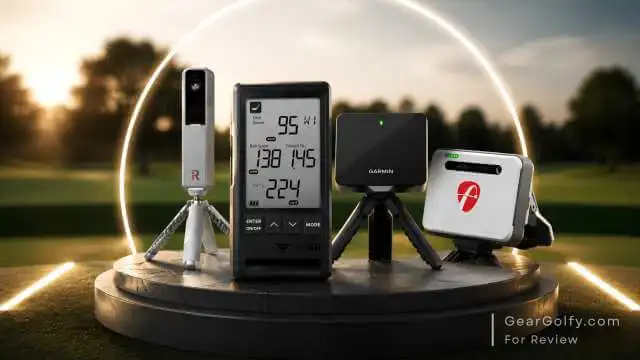
The budget launch monitor market has several popular options. Here is how the PRGR compares with other common choices.
| Feature | PRGR Portable Launch Monitor | Garmin Approach R10 | Rapsodo MLM2PRO | FlightScope Mevo |
| Price Category | Budget | Mid-range | Mid-range | Mid-range |
| Swing Speed | Yes | Yes | Yes | Yes |
| Ball Speed | Yes | Yes | Yes | Yes |
| Carry Distance | Yes | Yes | Yes | Yes |
| Advanced Analytics | Limited | Extensive | Extensive | More advanced |
| Portability | Excellent | Excellent | Good | Good |
| Smartphone App | Limited | Strong | Strong | Strong |
| Golf Simulator Features | No | Yes | Yes | Limited |
| Best For | Simple practice feedback | Serious golfers | Data-focused players | Training-focused golfers |
PRGR vs Garmin Approach R10
With the R10, you can use way more features; they are:
- Shot tracking
- Virtual courses
- Launch angle data
- Club path information
- Smartphone integration
However, it is much more expensive.
The PRGR wins out of the combo for golfers who require bare-bones feedback. Good for players building a home simulator and who are going to use them more than once
PRGR vs Rapsodo MLM2PRO
The Rapsodo MLM2PRO also offers more advanced analytics and provides feedback from video as well.
Suitability for Golfers:
- Swing analysis
- Shot visualization
- More detailed training data
The PRGR is more straightforward and less expensive, appealing to the recreational crowd.
PRGR vs FlightScope Mevo
The next category up is the FlightScope Mevo. You get some more professional-level measurements, but not without a pricier price.
Serious golfers looking for improvement may be better off with Mevo, but casual players might find that the PRGR provides all of the information they need.
Who Should Buy the PRGR Golf Launch Monitor?
Beginners (Recommended)
Indicators with hundreds of results confuse beginners instead of helping them. They need basic feedback, not advanced indicators.
Aspects of answers backed up by the PRGR:
- How fast is my swing?
- How far do I actually hit?
- Am I improving?
- Fantastic first book on performance tracking.
Intermediate Golfers (Highly Recommended)
This is likely the best target user group to aim for. Intermediate golfers have a grasp of the game but need to steadily improve.
The PRGR can support:
- Distance improvement
- Practice planning
- Speed development
- Equipment comparisons
Advanced Golfers (Depends on expectations)
It could even be seen as a portable practice tool for more advanced players. Still, golfers who require stickier swing analysis will probably want additional tech.
Golf Instructors (Limited Use)
Some instructors might use it to see basic track speed. Professional coaching environments, however, typically require a more complete data set.
Who Should Avoid the PRGR Portable Launch Monitor?
Not a good pick for golfers who need: The PRGR is likely not the right fit.
Professional Club Fitting Data
Seamless Launch Monitoring. If you’re trying to find precisely picked shafts, perfecting launch conditions, or scientifically evaluating ball flight, this device might be a little flimsy.
Complete Home Golf Simulator Experience
Those seeking some form of simulator gameplay would want to go for the more expensive options.
Detailed Swing Analysis
Golfers searching for:
- Club path measurements
- Face angle
- Spin analysis
- Launch optimization
This may require a larger – or better – launch monitor.
Final Recommendation
Get the PRGR portable launch monitor if you are;
You are a beginner, making sense of your distances.
✅ A mid-handicapper looking to step up
✅ A player who goes to the range a lot
✅ A price-ranged speed tracker
Consider alternatives if you need:
❌ Professional fitting data
❌ Full simulator features
❌ Advanced swing analytics
To summarise, if you are fond of simplicity and portability without complex analytics at prices that the budget is more than happy to bear, then the PRGR golf launch monitor is a good option for golfers.
FAQs
Overall, the PRGR portable launch monitor provides reasonable readings of swing speed, ball speed, and distance. To be clear, it is a training tool more than a professional club-fitting device.
Yes, indoors, but it needs a large enough play area for the radar to work. Resulting in higher penetration with larger indoor areas vs small rooms.
Yes. Beginners are among the better users because the device provides simple feedback on swing speed and distance without the complication of data.
No. It has the benefit of not relying upon high monthly subscription costs to deliver simple metrics.
It depends on your needs. While most premium launch monitors offer insights beyond basic analytics and even simulate golf courses, when looked at as a total package, PRGR focuses on keeping things affordable, speed– and distance-driven.