

It can become difficult to grip the club securely when your hands sweat, your glove wears out, or your fingers feel tired late in a round. Copper tech golf gloves provide an alternative to conventional leather, utilizing a composite of copper-infused fabric as well as elastic construction paired with inscribed surface materials.
This guide covers everything you need to know, including the key features, advantages, drawbacks, comfort, durability, maintenance, and overall value.
Table of Contents
Key Takeaways
- Copper-infused fabric is designed to enhance material performance and help minimize odors, not to provide medical benefits.
- This is important with a snug, compression-type fit.
- However, grip, breathability, and durability differ by brand/construction.
- These gloves should interest golfers who are seniors, beginners, recreational players, and those with sweaty hands.
- Before purchasing, compare the materials employed, size ranges available, reviews encountered, cleaning instructions for maintenance, and price.
Key Features of Copper Tech Golf Gloves
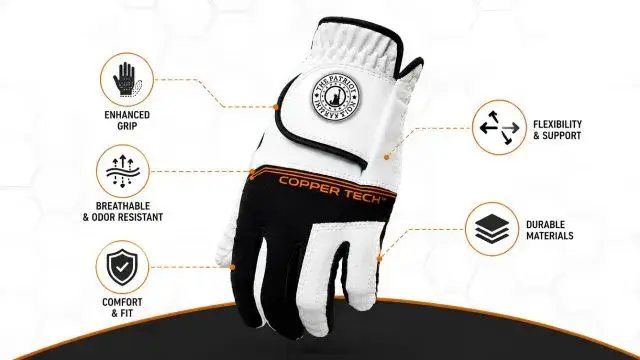
Grip and Palm Traction
However, many copper tech golf gloves feature textured zones throughout the palm and possibly also on the fingers. Silicone, rubberized print, or synthetic leather may lessen slipping if the hand or club handle becomes wet.
While some golfers enjoy the extra security, players who prefer a soft, thin leather palm may find it less responsive.
Comfort and Fit
Most copper tech gloves are a snug-compression fit. The stretch fabric moves with the fingers and lightly supports the hand and wrist. Comfort varies. What feels snug to one golfer may feel constrictive to another.
Breathability and Odor Resistance
Knit panels possibly permit more airflow than all-leather, which is a considerable advantage in sizzling or damp climates. Moisture-wicking clothes can help put an end to clamminess, too.
Copper-infused fabrics are most well-known for combating smells, but you still want to wash and dry them thoroughly.
Flexibility and Wrist Support
Using the elastomers to stretch and bend the fingers can help create a more natural grip. It also may help reduce bunching with flexible knuckle areas.
Truly, many models reach over the wrist more than normal gloves. That certainly can feel steady, but that is neither medical support nor intervention.
Materials and Durability
Sure, the whole thing is only cardboard with a copper label, which doesn’t let down on durability. Some gloves have reinforced palms for lots of practice, and some lighter knit areas or grip patterns printed will wear out quicker.
Points of wear might be peeling texture, cuffs that have been stretched, and seams where the stitching is loose. If you want to extend the useful life, fit those gloves with two rotating ones.
Potential Benefits of a Copper Tech Golf Glove
Some beginners may like the added palm traction because it makes the club feel more secure without promoting a white-knuckle grip. Your swing mechanics aren’t going to be fixed by a glove, though making contact time and again with the ball may help your confidence.
Seniors, recreational golfers, and players with sweaty hands might enjoy the stretchy material, snug fit, breathability, and grip zones. It is suitable for practice or casual rounds, and results vary by individual comfort.
Possible Drawbacks
Sizing can be inconsistent. Compression-type gloves tend to fit more snugly than standard golf gloves, and one-size-fits-all small, medium, or large tags may not match the fitting of what you would normally wear.
The colors might be limited, and they downright some of the models look more like training aids than golf clubs. Also, synthetic leather can be warmer, thicker, or of lower quality than the best leather.
Durability varies across brands. Printed grip material can peel, and fabric can become stretched out after being worn or washed. A thin glove is designed for competitive golfers who are looking for maximum feedback from the club.
Copper branding should not be reflected in price, but construction quality should. A higher price doesn’t mean better grip, comfort, or durability.
Copper Tech Golf Gloves vs. Traditional Golf Gloves
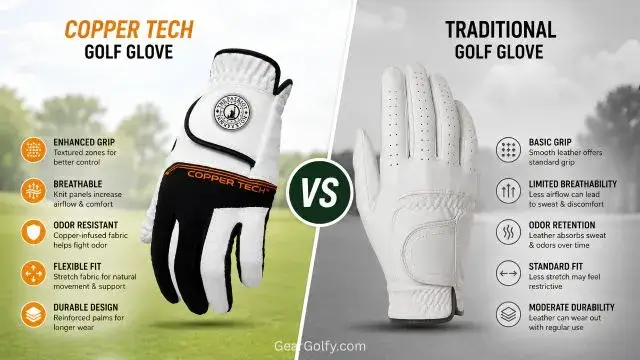
| Feature | Copper-Infused Style | Traditional Golf Gloves |
| Materials | Stretch knit, copper-infused yarn, synthetic grip | Leather, synthetic leather, or hybrid |
| Grip | Textured palm zones | Natural or synthetic tack |
| Breathability | Often good in knit areas | Varies by material |
| Support | Snug fit with more wrist coverage | Standard close fit |
| Care | Some models are washable | Leather usually needs gentler care |
| Price | Often budget to midrange | Budget to premium |
| Ideal user | Casual players, seniors, beginners, sweaty-hand golfers | Players who prefer a classic feel and feedback |
Some customers refer to them as copper tech golf gloves and make comparisons between them online. It does not matter what wording you get; your focus must be on the fit, palm fabric, stitching, return policy, and care needs.
How to Choose the Right Size and Fit
A glove should fit closely, not pinch. Very little more material should rest at the fingertips, and you should be able to make a fist holding a club without numbness or bunching.
Since this style is often made from compression fabric, measure your hand and refer to the vendor’s size chart. Do not only go by the size you wear in another brand.
The left glove goes on the left hand for most right-handed golfers. Most lefty club-wielders don this on the right. Verification of how the product listing labels gloves by hand and position.
Read our another post on "10 Best Ladies Golf Gloves for Comfort, Grip, and Performance".
How to Care for the Gloves
Follow the manufacturer’s care label. Other than that, some cloth models can be washed by hand or in a gentle mode of the equipment washing machines, while there is additional careful cleaning.
When washing, use a mild detergent only when allowed; do not use bleach, and do not wring the gloves. Unless the care label says otherwise, let it air dry naturally and keep it away from direct heat.
Keep it in the golf-bag pocket, loosely formed and dry (you shall ensure this ahead of storing).
Who Should Consider Buying It?
If you’re a beginner, senior, range player, or recreational golfer seeking breathable golf gloves with additional palm texture for extra grip or tighter wrist security, then a copper tech golf glove would be right for you.
So if you’re worried about your leather being ‘too thin’, hate feeling the ball compress underneath your foot, or want to maintain a more traditional tournament look, this isn’t for you. However, we do recommend that those with sensitive skin read through the full list of ingredients.
Is a Copper Tech Golf Glove Worth It?
This design could be a worthy addition to your gear if you’re after the breathability, textured grip, flexible material, and snug fit.
It’s not a better old-fashioned glove by default, and copper-stuffed material is anything but a medicinal skin treatment. Some of these are not really an issue, and I discount those as non-value breakage; the best value is from a correct fit, feel-good material, and reasonable durability for price.
Conclusion
Copper tech golf gloves fused with textured grip, flexible fabric, breathability, and a tight, supportive form-fit wrap. Its primary downsides are uneven sizing, inconsistent durability, and a plasticky texture that may not please golfers who want thin leather.
Compare size chart, materials (composition), stitching, care label (wash instructions), customer reviews, and price before buying. A rigorous Comparison will aid you in selecting gloves in shape for your hand, playing conditions, and expectations.
FAQs
Copper is infused into the fabric or yarn, where it has the potential to assist in odor control. It does not replace the need for diagnosis, treatment, or prevention of any medical condition.
When the palm has sufficient silicone, rubberized, or synthetic traction zones, it may help. Importantly, you are fitted to when the club-head-angle and lie-center at address match your set-up: notably, fit, moisture, grip pressure, and condition of club-handle also matter.
They are all washable, but instructions vary. Check the label provided by the manufacturer and read it carefully to ensure that hand or machine wash is being performed on this fabric material, grip print, and seams.
A right-handed golfer typically wears the glove on his left hand. For a left-handed golfer, you typically put it on the right.
It absolutely can be —given the breathable knit panels and moisture-wicking fabric. And since no one wants to die painfully, don’t go for a fit that is too tight.

